
Food Manufacturing Security Systems
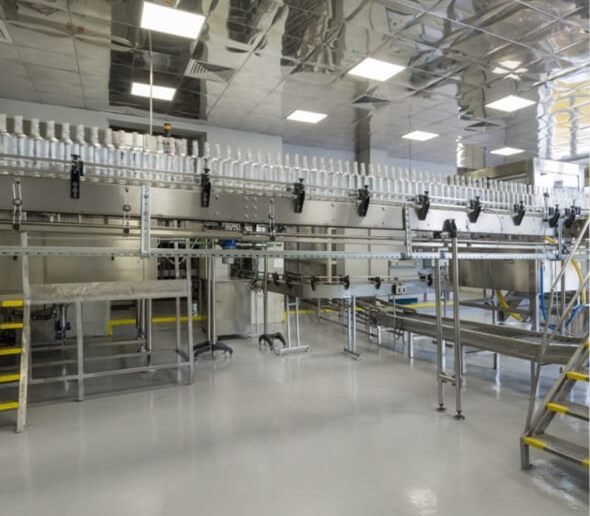


What security does a food processing plant need?
Where food plant security matters

Production floor and packaging
Ingredient and chemical storage
Bulk liquid receiving and tank rooms
Shipping and receiving docks
Truck gate, perimeter, and trailer yard
Employee entrance
Security systems for food and beverage plants
Access by role, room, and shift
Cameras for lines, docks, and tanker bays
Alarms that zone the plant
Live monitoring for nights and shutdowns
Visitor and contractor check-in
Equipment care and monthly reports
Keys and a clipboard vs. a connected plant system
| What matters | Connected security system | Keys, clipboard, and a recorder |
|---|---|---|
| Ingredient and chemical rooms | Open only to the badges you approve, during the hours you set | Anyone with a key, or a door left propped |
| Tanker unloading at night | Video of the hookup and a log of every bay and tank room door opened | Seal numbers on a paper log and no video of the hookup |
| Sanitation crew or contractor at night | Checked in, badge limited to set doors and hours, listed until checkout | Let in by whoever is on shift, with a name on a clipboard |
| Shift change | Turnstiles stop a second person on the same badge | The door stays open until the crowd is through |
| Employee leaves the company | Badge turned off from the app right away | Rekey the doors or live with the risk |
| Customer complaint about a batch | Door logs for the room, and line video for that shift if your retention covers the date | Ask the crew and hope someone remembers |
What our customers say
“We had very special requests and after researching many companies, we landed on Imperial. We needed access control on both sides, w/ anti-passback, which is rare from my understanding, and they were able to deliver.”
SRG, Google review
How a food plant security upgrade works
Site assessment
Design and quote
Installation
Training and support
Frequently asked questions
How much does a food manufacturing security system cost?
It depends on the doors, dock positions, and ingredient or tank rooms you want on badge access, how many cameras the lines, docks, and yard need, and whether live monitoring or a managed service plan is part of it. Each plant is priced after a free on-site assessment, with options laid out in the written quote. The areas your food defense plan identifies can go first, and the yard, the gate, or a second building can follow.
Does the FDA require a food defense plan?
It depends on your facility. FDA’s Intentional Adulteration rule, 21 CFR part 121, requires covered food facilities to prepare and implement a written food defense plan. It applies to facilities that must register with FDA, and it exempts some operations, including very small businesses (generally those averaging under $10 million a year in human food sales, adjusted for inflation) and alcoholic beverages at facilities that hold certain federal alcohol permits or registrations. Your food safety team or counsel decides whether the rule covers your plant.
Are cameras and access control part of a food defense plan?
They can be, but the plan is a written document your team prepares. The rule calls for a vulnerability assessment that weighs physical access to the product and considers an inside attacker, then written mitigation strategies at each actionable process step. FDA’s draft guidance lists doors around such a step that only authorized badges open as one example. It also notes that a fence or locked exterior doors may not protect those steps from someone with legitimate access. We lay out readers and cameras around the steps your plan identifies.
What are the four key activity types in food defense?
FDA’s draft guidance for the Intentional Adulteration rule describes a vulnerability assessment method built on four key activity types. They are bulk liquid receiving and loading, liquid storage and handling, secondary ingredient handling, and mixing and similar activities. In a typical plant those happen at a tanker bay, a tank room, an ingredient room, or a mixing area, and each of those spaces can take a reader on the door and a camera on the work area.
Can security cameras go in washdown areas?
It depends on how the room is cleaned. Daily washdown with hot water, pressure, and sanitizing chemicals is harder on a camera than rain, so during the site assessment we ask your sanitation team how each room is washed before we choose a camera, housing, and mounting spot for it. Our lineup includes weather-resistant and tamper-resistant models, and we plan mounts and cable runs with your food safety team so cameras stay clear of open product and out of the way of cleaning.
How do we keep drivers and visitors off the production floor?
Put readers on every door between the dock, the drivers’ waiting area, the offices, and production, so only staff badges open them. Visitors, auditors, and contractors check in at reception and get a badge that opens only the doors and hours you allow. Cameras on the dock doors and the driver entrance record each visit, and the visitor list shows who has not signed out yet.
How do we stop tailgating at the employee entrance?
Turnstiles are the strongest fix, because each badge lets one person through. With a reader inside and outside the entrance, anti-passback rejects a second entry on the same badge until it has been used to exit, so nobody can hand it back to a coworker. Where a turnstile will not fit, a door contact flags the door if it stays open, and the camera shows who slipped in behind someone. Each swipe goes into the log with a name, a door, and a time.
Can you watch the plant on nights, weekends, and shutdowns?
Yes. You set the hours, for example nights, weekends, holidays, and planned shutdowns, and our live video monitoring agents keep watch on your yard, gate, dock, and tanker bay cameras during them. When AI spots a person at the fence or a vehicle in the tanker bay, an agent looks at the live feed and warns the person over a speaker. If the warning is ignored, the agent calls police. You get the recording of each incident, and our monitoring record includes more than 2,600 documented apprehensions.
Can we lease the system instead of buying it?
Yes. We offer leasing options on the systems we design and install, with flexible terms, so you can put the system in now and keep your capital available for other needs. Ask about leasing when you request your assessment, and we’ll include the options with your quote.
Where does Imperial install food manufacturing security systems?
We work with businesses across the Chicago area and throughout Illinois, Wisconsin, Indiana, Michigan, and Florida from our locations in Elgin, Chicago, Milwaukee, Fort Wayne, and Sarasota. Mention your address when you request a quote and we’ll confirm coverage.
Related industries
Industrial & Manufacturing
Pharmaceutical Manufacturing
Transportation & Transit
Cannabis & CBD
Get a free quote
- Free on-site assessment
- Installed in phases around production and sanitation
- Licensed and insured in IL, MI, and FL
Schedule your free site assessment
"*" indicates required fields